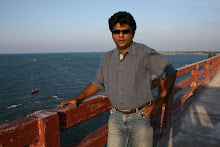
By P C Vinoj Kumar
Ever so quietly, the Indian Health ministry is making plans to help multinational sanitary napkin makers with a mega project that is expected to cost the government Rs. 2000 crores annually.
According to a report in The Hindu last Sunday, the government plans to supply about hundred free sanitary napkins to an estimated 200 million rural women annually to boost female health and hygiene in rural India. At the rate of Re one per napkin, the project cost is evaluated at Rs.2000 crores annually.
Many may not be aware that the lion’s share of the Indian sanitary napkin market is controlled by two MNCs, Procter and Gamble (makers of Whisper) and Johnson and Johnson (makers of Stayfree and Carefree). It is likely that the government may strike a deal with one of the two companies for the napkin project. A distant third player in this market is Kimberly Clark Lever, a joint venture between Kimberly Clark and Hindustan Lever Limited.
The government’s motives in mooting this project are questionable, especially at a time when Coimbatore based social entrepreneur A Muruganantham’s low cost sanitary napkin manufacturing machine is creating a quiet revolution in rural India.
Costing around Rs.1 lakh per unit, it is within the reach of rural women’s self-help groups, who avail of bank loans to buy the machine. The project is being implemented in about 200 places across India. In Maharashtra, the State government is associated with the project. Apart from providing employment to hundreds of rural women, it has brought hygiene to the doorsteps of rural households.
Tehelka reported his work in August last year. In November last year, Muruganantham received the National Innovation Foundation’s Fifth National Grassroots Technological Innovations and Traditional Knowledge Award from President Pratibha Patil.
A class ten dropout, Muruganantham developed the machine after nearly four years of painstaking research. It took him nearly two years to realise that the padding used in sanitary napkins was made of pine wood pulp and not ordinary cotton.
Reacting to the government’s proposed project, Muruganantham told this writer over phone from Coimbatore: “For half the cost of the annual expenditure of the proposed project (that is, Rs.1000 crores), it is possible to set up one lakh units of my machines all over the country. Mine is proven technology, and low cost at that. The napkins that are made from these machines are as good as any other available in the market,” he points out. In 2006, IIT (Madras) awarded him the first prize in a contest for innovating for betterment of society.
Muruganantham has refused to sell the patent for his machine and even turned down a blank cheque offer from a private company. “I want my technology to benefit people. I am working on the social-entrepreneurship model, selling the technology directly to the people and cutting costs,” he says.
The 47 year old inventor says that banks would be keen on giving loans to self-help groups for purchasing the machine if the government gives an undertaking that it would buy back the napkins from them.
“It could earmark Rs.2000 crores - the same amount it has proposed to spend on the project - for the buyback scheme. It doesn’t have to spend a single paisa on buying the machines. The banks will take care of that cost. If the government is willing to consider my proposal it can generate employment for one million women, while achieving its goal of promoting hygiene among rural women,” he says.
Will his voice be heard or would the government and the MNCs have their way? We need to wait and watch.
P C Vinoj Kumar is a journalist based in Chennai. A former reporter with Tehelka, he is currently involved in launching an online magazine.
Tuesday, February 23, 2010


Tuesday, October 20, 2009
What do the Chinese want from India?
First, a disclaimer: I am not an expert on Indo-China relations. But as one who sticks to a basic journalistic quality of tracking news and events that make headlines, I am aware that all is not well in the relations between the two countries. From the news I have been reading and watching in the last few weeks, it is quite obvious that the two Asian giants have upped the ante against each other.
The Indian media appears to be egging on New Delhi to adopt an aggressive stance and match the rhetoric of the Chinese, who have staked fresh claims over the Indian State of Arunachal Pradesh. The Chinese protest against Prime Minister Manmohan Singh’s recent visit to the North Eastern State evoked strong reactions in the media – quite justifiably.
In my view, China is behaving like the typical school bully, who would pick up fights with every other boy in the school, just to show who the boss was in the campus. The bully would have a free run till he gets his nose bloodied some day or someone at least stands up, looks him in the eye, and says, “Ok, dude! Let’s fight it out, if that’s what you want.” India has to respond in a language that the Chinese would understand.
English daily, Deccan Chronicle, adopted a balanced view in its editorial titled “It’s time to speak frankly to China.” While advocating a bilateral summit to resolve the standoff between the two nations, it noted in the issue dated 19 October 2009: “India needs to prepare itself to deal with any situation that may be thrown up. Economically, politically, militarily, and in terms of its weight in the international system, it is a more capable entity than it was in 1962.”
However, contrary to the general thinking in the media, The Hindu continues to believe that the Chinese and Indians can remain friends forever. It perceives the current turbulent phase in the Indo – Chinese relations in a refreshingly optimistic manner.
In an editorial dated 19 October 2009, “How to end this discordance,” the paper noted: “The tone, although not the substance, of India – China relations has recently been through a problematic phase, with misperceptions and motivated media campaigns creating the impression of some kind of crisis.”
The Hindu further added for clarity: “That this is not so has been made clear by the governments of both countries; in their own ways, they have made the point that the positive overall trend of the “China – India Strategic and Cooperative Partnership for Peace and Prosperity” remains unaffected.”
Is it so? Well, an IANS report from Kathmandu, which was carried by many dailies the following day (20 October 2009) - The Hindu was understandably not among them – provides a contrasting picture.
Deccan Chronicle ran the report with the headline: “Kashmir not part of India, claims China.” The report said: “Besides issuing separate visas to Indian passport holders from Jammu and Kashmir, China is also projecting the disputed territory as an independent country in other ways.
Visitors to Tibet, especially journalists invited by the Chinese government, are given handouts where Kashmir is indicated as a country separate from India.
Media kits providing "basic information" about Tibet - which China attacked and annexed in the 1950s - says Tibet "borders with India, Nepal, Myanmar and Kashmir area".
It could be noted that barring the so called “Kashmir area,” the other three are sovereign countries. So what are the Chinese trying to say? Or still better to ask, what is it that China wants? That’s some food for thought.
The writer PC Vinoj Kumar is a Special Correspondent for the Indian weekly magazine - Tehelka. The views expressed are his own.
Thursday, September 3, 2009
Boycott Threat Looms Over Sri Lanka
The ‘Boycott Sri Lankan Sports’ campaign has taken a significant turn with the filing of a petition before the Madurai Bench of the Madras High Court seeking to restrain the Indian cricket team from taking part in a tri-series involving India, Sri Lanka and New Zealand. In his petition, advocate Joel Poul Antony, stating that he is a great fan of the Indian cricket team, makes a prayer for calling off the Indian team’s tour to Sri Lanka citing the earlier precedent of India snapping sports contacts with the racist South Africa in the 1980s.
The petitioner charges Sri Lanka with committing genocide against the minority Tamils in the country and of violating international human rights laws. Citing the confinement of the Tamil speaking war refugees in military controlled camps, and treating them as slaves, he argues that by these actions Sri Lanka is violating provisions of the Fourth Geneva Convention of 1949 and the Convention on the Prevention and Punishment of the Crime of Genocide, 1948. The petition also notes that the Sri Lankan navy has killed more than 500 Indian fishermen (in the last three decades) and there have been frequent agitations in Tamil Nadu against these killings.
The court has ordered notices to the secretaries of Home, External Affairs and Youth and Sports Welfare ministries of the government of India. Whether the Indian team’s tour is going to be called off or not - the tri-series is scheduled to start next week – this petition by the Madurai advocate could be a forerunner to future campaigns against the Sri Lankan government.
The ‘boycott Sri Lanka’ slogan is a powerful weapon that Colombo will find it difficult to handle with its military power. This campaign has been going on for some time on a low key, with the ‘boycott’ emails doing the rounds. With the petition by the Madurai lawyer, the campaign has been taken to another level.
A sustained campaign by the Tamil diaspora, who are present in large numbers in the cricket playing nations of Australia and England, can turn around public opinion so swiftly that before Colombo realizes it, President Rajapaksa and his aides would be fighting a diplomatic battle with their back to the wall. It will be a difficult battle for them. Surely, it will not be as simple as getting the support of China and Russia in the United Nations security council to block a debate on the human rights situation in Sri Lanka.
The genocide charges against Colombo will be discussed on the streets, play grounds and sports pages of newspapers and magazines around the world. The spokespersons for the Tamil cause may not be a Thirumavalavan, or a Vaiko or a Nedumaran in Tamil Nadu anymore, but possibly a Sachin Tendulkar or a MS Dhoni or a Ricky Ponting.
The cricket boards of the respective countries will have to respect the sentiments of players. They would have no choice except to boycott Sri Lanka if the players feel so. Just last year, Zimbabwe was isolated by the other cricket playing countries of the world because of the racist policies – against the white minorities – and human rights violations of the Robert Mugabe government.
English player Andrew Strauss spoke out against Zimbabwe last summer. A BBC report in June said, “The batsman feels both the England and Wales Cricket Board and the government have missed previous chances to send Mugabe a message by refusing to play. He said: "In the past there've been chances to show the strength of feeling here and the government chose not to. If it comes down to players to do that we'll definitely have to look at it."
A few weeks later, the England and Wales Cricket board announced that it was canceling its 2009 tour of Zimbabwe. “All bilateral arrangements are suspended with Zimbabwe cricket with immediate effect,” the board said. A disgraced Zimbabwe cricket board announced that it was pulling out of the 2009 Twenty20 world cup in England “in the larger interests of the game.”
Zimbabwe cricket chairman Peter Chingoka said, “"We have been informed that the British government may not grant visas to our players and that situation may prevail during the Twenty20 World Cup. We don't want to be gatecrashers."
However, for the ‘boycott Sri Lanka’ campaign to be successful, the Tamils should get the support of top international players. They need to apprise players like Sachin, Dhoni, Ponting, Hayden, and others, on the sufferings of Tamils in Sri Lanka. They need to tell them how Sri Lanka has been indicted by human rights agencies around the world over the rampant “disappearances” of people in the country. They need to tell them about the absence of safety for journalists in Sri Lanka.
A senior journalist Lasantha Wickrematunga was killed by unknown assailants early this year. Last week, the editor of The North Eastern Monthly, J S Tissainayagam, was sentenced to twenty years rigorous imprisonment on charges of receiving funds from the LTTE. Over forty Sri Lankan journalists have fled the country fearing for their lives.
The moment international cricketers become aware of the situation, they themselves would lead the campaign for an international sports boycott against Sri Lanka.
The writer PC Vinoj Kumar is a Special Correspondent for the Indian weekly magazine - Tehelka. The views expressed are his own.
Subscribe to:
Posts (Atom)